Contributors

Partner with us
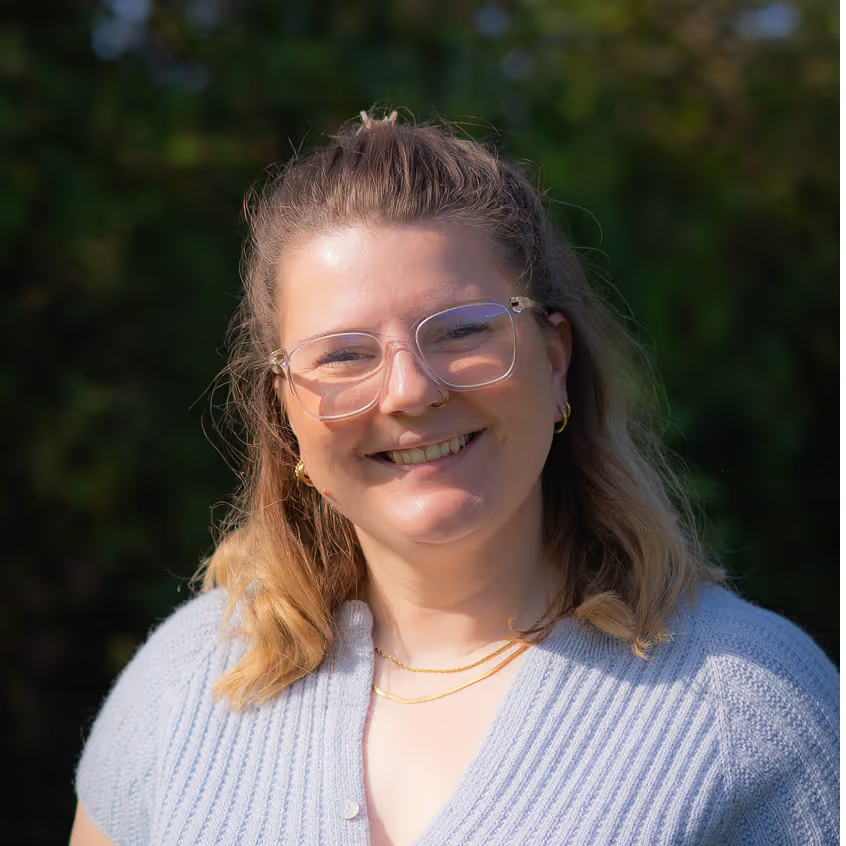
This week, we sat down with Kathleen Farley, owner and founder of independent record label Signal Alchemy. Kathleen walks us through her eclectic musical history, what mattered most in the early days of Signal Alchemy, and why she's always asking herself, 'Will this make the boat go faster?'.
I remember, back in my early childhood, my parents had one of those Stereo 8 players and I loved the feeling of clunking in those big chunky 8-track cartridges. So satisfying!
My parents' collection leaned mostly towards instrumental music, but within that space their tastes were weirdly eclectic: Herb Alpert & the Tijuana Brass, Booker T. & the M.G.'s, Henry Mancini, Holst's The Planets... It gave me a broad sampling of what was popular across different genres and eras, so I was always trying to triangulate what elements made each song really popular.
Admittedly, I was kind of a weird and obsessive kid! I pretty much wore out those cartridges from playing them over and over again. Most of those tracks are still imprinted in my mind even today.
Herb Alpert's version of 'A Taste of Honey' is still a musical touchstone for me; everything about the track just works. The isolated bass drum beat, the structural tease and tempo reset in the middle, that beautiful acoustic reverb, the double-tracked trumpet against that clean, punchy sound - it just really hits home for me.
I couldn't put it into words back then, I just knew I loved it. Looking back now, I see that 'A Taste of Honey' had a rare kind of cross-generational appeal that made it evergreen. It shouldn't have done as well as it did! It was released at what was essentially the height of the British Invasion and sounded nothing like it, but I think people were hungry for an alternative to rock and roll that still sounded cool and modern and hip - and the track ended up being this huge commercial success as a result. At one point, Herb Alpert & the TJB even outsold The Beatles! That's what helped build A&M Records into an industry empire, which is a whole other story.
When I started working in music, I knew that was the kind of music I wanted to work with: music that didn't chase trends, music that broke rules and crossed boundaries and defied expectations, music that was timeless.
Yes, one hundred percent.
The entire A&M Records genesis story is such a huge inspiration to me - the whole, 'we believe in this, so we'll do it ourselves', philosophy. That scrappy, $200-investment-out-of-a-garage approach. Betting on their own taste and independence, despite industry pessimism about them. I love underdog stories.
And they turned into such a killer label!
All that early Herb Alpert stuff drove the revenues that gave them the financial autonomy to do what they wanted, how they wanted. Then they developed this smart, hyper-efficient business model that drove even more commercial success for the rest of their roster.
And what a roster! The Carpenters, Carole King, Supertramp, The Police, Quincy Jones, Bryan Adams, Janet Jackson - the list goes on.
They were really selective about what they put out, too. Most people don't realise this, but they only released 40-65 records per year, while other major labels like CBS were putting out 40+ records per month. That kind of focus and discipline turned into hit after hit after hit for them.
But the most important thing I think they did was put the artist's creative intent first, above corporate control. Jerry Moss said, "You have to be lucky enough to find geniuses, welcome them, and get out of their way.". I admire that so, so much.
Signal Alchemy actually started out as a sublabel of another label, Maisonneuve Music. I started Maisonneuve Music in 2014, because I wanted more people to hear my friends' music. I'd seen a lot of friends record these really amazing EPs and albums that went unheard, because no one really knew what to do with their records after the release party was over.
To be clear: I didn't either!
I just knew that there had to be more opportunities out there when it came to promoting music, and I was determined to figure that out. I knew that if my friends couldn't make money from their music, they'd eventually stop making music, and I just didn't want to see that happen. I wanted this to be my career, and I wanted to make sure the artists I worked with could also build real, sustainable careers from their music.
So, I just started trying things and paid close attention to what worked and what didn't. If it worked, I doubled down. If it didn't work, I quit doing it.
Maisonneuve Music wasn't focused on any specific genre back in the early days, so I got to see what worked and what didn't across different genres. We had some early success on college radio (Canada has a really great campus and community radio scene) with some experimental electronic/IDM music we were releasing, and that gave my confidence a boost - but it never translated to increased sales, so I kept looking for more avenues to pursue.
Despite launching in Europe in 2008, Spotify didn't arrive in Canada until late 2014! And it took a while to catch on over here. But over time, as the DSPs grew and we saw music consumption shift over to streaming, we started pitching to third-party playlists. That turned into a widespread tactic over time, but back then nobody was doing it - which gave us an edge.
I remember cold-pitching these playlist owners, just normal people who happened to have these really popular playlists, and them being blown away that I was even reaching out to them. Many of those early connections turned into big supporters of our music, introducing us to new fans, which drove even more streaming activity that ultimately became a catalyst for some serious algorithmic traction.
Signal Alchemy started in 2018, mostly as an experiment. One of the challenges with Maisonneuve was that we had no genre focus, which was fun and artistically rewarding, but honestly a bit of a nightmare when it came to positioning the label.
While I was working on some of Maisonneuve's ambient-leaning and instrumental releases, I'd noticed this niche demand for calm instrumental music - lots and lots of growing playlists in this space, but not a lot of artist competition at the time. I was already motivated by the idea of developing a more focused musical brand, and I felt the organic ambient genre space had a lot of untapped potential, so we spun off Signal Alchemy to test the waters.
Then the pandemic hit, and the bottom just fell out of the whole touring artist scene. More and more Maisonneuve releases got delayed or shelved.
At the same time, with the lockdowns, the appetite for calm instrumental music exploded. We had already launched and were in our early growth phase, so we were perfectly positioned right at the crest of that wave.
A door closes, a window opens, right? I think Signal Alchemy's revenues surpasses Maisonneuve's shortly thereafter and it eventually evolved into being our primary label.
We went on a signing spree starting in late 2022, and we brought on board some organic ambient heavyweights, like Domy Castellano, Retland, Center of Attention, Niclas Lundqvist... All of them absolutely amazing artists and it was such a great fit. We had the systems and an existing audience, they had the talent and the momentum, and it really snowballed from there.
I'm also really proud of the role we played in helping to develop and grow audiences for artists like Sun Echo, Morouj, and Le Morne. And, honestly, I'm just so incredibly proud of the whole roster.
These days, we've slowed down on signing, because we want to stay lean and focused. But there's still a lot going on behind the scenes. We're always exploring ways to develop our catalogue and better position our roster, testing new tactics, and refining what we do.
It's been an amazing journey and the label looks really different now than what I initially envisioned back in 2014. But, ultimately, my goals haven't really changed: I want my artists to have sustainable careers, because if they can't make a living and they stop making music, everybody loses.
It's a real existential mission for me, to do my part to keep the music going.
I actually have my friend Mike Vial to thank for that. Mike's an excellent singer-songwriter from Ann Arbor, Michigan - he was an early supporter of Maisonneuve Music, and I'd always admired his smart DIY approach. I still have the email he sent me back in early 2015, where he literally said: "One idea: have you pitched to folks making playlists on Spotify?"
At that point I was still figuring out what the heck Spotify was, so I can't claim to have invented the idea, but it really made sense to me and I couldn't stop thinking about it.
I decided to test it with a new instrumental fingerstyle guitarist I was working with (Emilio Bonito) in a super niche genre. I poked around on Spotify and could only find around six playlists at the time that featured that kind of music. I thought, whatever, I'll try this anyway and see what happens. So I researched to find contact info for the playlist owners, reached out to each of them, and... they actually wrote back! And put our track on their playlists! And suddenly this artist who'd barely been getting any attention is now the label's top-performing artist. It blew my mind.
So, following my, 'if it works, do more of it' philosophy, I started looking for ways to up the ante. I have a bit of a nerdy tech background, and I thought: 'what if I built tools to collect and organise and classify and track third-party Spotify playlists? Like a massive CRM database for Spotify curators, that we could use to pitch to curators at scale?' I kept mulling this over and telling artists I knew that I wanted to do this. My friend Josh was in a band (Of Gentlemen & Cowards) that had an album coming out in early 2016, and right away he said, "Okay, let's do it!" - and then I realised I needed to actually build the thing!
So I built it. No vibe-coding back in those days and no budget to hire any outside help - just sweat, tears, a whole lot of Googling and many hours spent on Stack Overflow!
I taught my artists how to use it and it absolutely supercharged our ability to connect one-on-one with the right curators. I was obsessed with getting the right fit; by then I knew enough about the DSP algorithms to realise that I didn't want our music slotted into the wrong playlists, where the tracks would get skipped over by listeners who just weren't interested. I saw playlists as a vehicle to reach audiences that actually wanted to hear the kind of music we were releasing - but only if they were the right kind of playlist.
Even now, when I'm producing our organic ambient releases, I'm always trying to make sure that we're targeting the right audience. The word 'ambient' is such a huge umbrella term and there can be a world of difference between different forms of ambient. Just because someone says they like 'ambient' doesn't necessarily make them our target audience. And, conversely, plenty of our biggest fans probably wouldn't even consider themselves huge fans of ambient. Audience fit matters.
As far as I know, Brian Eno was one of the first people to use the term 'organic ambient'. I think it's a useful way to describe any sort of environment-driven ambient music that uses natural textures, field recordings, etc.
We chose it for Signal Alchemy because I noticed a few years ago the term 'organic ambient' started showing up in Glenn McDonald's human-supervised genre system over at Spotify. Most of our artists were already being classified by Spotify as 'organic ambient', and so it made sense to embrace it.
These days, we think of organic ambient as ambient music that's shaped by place and process. Our artists get their inspiration from local environments and they blend field recordings into their music. It's important to us that the field recordings aren't just decoration, though: they have to shape the emotional arc of each song and really communicate that sense of place. So it's less about a stylistic template, and more about where the music comes from and how it's made.
[Kathleen has written more about Organic Ambient here.]
Every artist signing we've ever done starts with getting to know the artist first. Their story, where they come from, what inspires them to make music, their process, the tools they use... we want to know it all. My goal is just to find good talent, then get out of their way.
Our process starts with a video call with Michael Chambers, our head of A&R. He's a long-time audio engineer and producer (and an artist as Harmonic Pathways and moon:and:6) and he loves talking about music, so that step usually ends up turning into a long conversation! He goes over our contract terms, expectations (both ours and theirs), what our release pipeline looks like, day-to-day logistics, etc. After that, everything runs through a Slack workspace: if an artist has a question, they can ask it there and get an answer there (we're across a lot of different time zones, so if it's not an instant answer it's ASAP!). We also do ad hoc video calls whenever helpful and fun stuff like virtual holiday parties.
Once signed, Michael works with an artist on track selection, branding, etc. Most of the artists we work with are incredibly talented producers in their own right, so Michael doesn't usually get hands-on during production. We offer light mix tweaks or basic mastering if needed, but we do have a very specific sound that we're going for and Michael is the gatekeeper for whether a track meets that threshold, both in terms of style and audio quality. If a track doesn't quite fit our brief, there's nothing stopping the artist from releasing that track independently. We're not keeping our artists in a cage!
Once Michael signs off on the creative, everything gets passed over to me. I set up distribution, line up DSP pitching, produce the editorial materials and creative content, then plan and execute the entire roll-out. Once I get masters, it's usually a 10-week process, start to finish. We make preview links and fanlinks in-house, then hand them over to the artist to use however they like. Some artists get really hands-on with promotion, and some don't. I leave that up to them.
As the label, I feel it's our job to do most of the heavy lifting when it comes to promo. The artist has done their job making the music. It's our job to get the music out there, into the right ears. My view is that if labels expect to share royalties, then they should add value.
That's a big, tough question!
I think it's important not to romanticise the past. I actually tried to start a record label in the late 90s, well before Maisonneuve and Signal Alchemy. But recording music was just so expensive and hard to do in those days. Studio time was really, really expensive. DIY recording meant renting a lot of gear, and you needed someone at the helm with really solid audio engineering skills, or your recording sounded like garbage.
We gave it a good go, but the label fizzled out after only 3 albums. We struggled to get physical distribution and the internet was too new to support digital-only labels. Promotion meant physically putting up posters around the city, physically mailing things to radio stations, and spending hours on the phone trying to convince industry folks to come out to shows. Honestly, it was a slog.
Don't get me wrong: those days were challenging in a fun way and I am glad I had those experiences. But I wouldn't go back!
It was a lot of work for not a lot of money (often no money), which is fine if you're just making music for fun - but musicians need to eat and pay rent, and so do I. The income pathways we take for granted now just didn't exist back then. So, in some sense, that aspect of the industry has moved in a positive direction.
But that doesn't mean there aren't a lot of problems with the current state of the music industry.
I don't like the concentration of control by big tech companies (looking at you, Google, Amazon, Spotify, Apple, Meta...). The opacity of streaming algorithms is hugely problematic too. There's an opportunity for government regulation to step in here and introduce legislative changes that would benefit both artists and consumes. But will that happen? I'm hopeful, but not confident.
So, is the music industry moving in a positive direction? I guess my answer is maybe? It depends? Time will tell!
I have a post-it note stuck to my computer that says, "Will it make the boat go faster?".
It's a famous question that comes from the British men's rowing team prepping for the 2020 Sydney Olympics. The team went from being underdogs to winning gold by running every single training decision they made through just one single question: will it make the boat go faster? If yes, they did it. If no, they dropped it.
I try to run Signal Alchemy that way. Whenever I'm deciding what things to do or what strategies to invest in, I ask myself that question: will this make the boat go faster?
Ironically, playlist pitching! With the exception of a few curators who we know and trust, we've essentially stopped cold-pitching third-party playlists. It was a fantastic tool for us 10 years ago, but the landscape has changed a lot since then. The ROI just isn't there for us anymore and we have better ways of getting our music in front of the right audiences.
I'm also bearish on social media. Again, I just haven't seen the ROI. I'm not suggesting every artist should abandon their socials, I just think people give it way more credit as a promotional tool than it deserves. We work with artists who don't lift a finger on socials, beyond the occasional post, and they're doing just fine. And I see other artists run themselves into the ground creating content for their socials, and for what? For us, it just doesn't move the needle, revenue-wise. And more importantly, I hate building on rented land. One algorithm change and that audience disappears.
Honestly, I'd much rather see artists put that time and effort into their music or into build a mailing list they actually own. We've put a lot of effort into our mailing list and we definitely see the impact. Email might feel unsexy or old fashioned, but it works.
Without meaning to sound conceited, no! I wouldn't do anything differently.
There were plenty of mistakes made, but all of them taught me lessons that shaped my next decisions and ultimately served me well over the years. If I hadn't made those mistakes and learned from them, we wouldn't be where we are now. So, no regrets.
Alpert and Moss were huge influences. Sylvia Robinson, for recognising the untapped potential of hip hop music in the late 70s and successfully capitalising on it. In fact, the whole hip hop industry is a huge inspiration for me - Dan Charnas' 'The Big Payback: The History of the Business of Hip-Hop' should be required reading for all aspiring music business entrepreneurs and execs.
I try to keep my perspective broad, so I try to look outside the music industry for guidance too. The single most helpful book I ever read was 'The Lean Startup' by Eric Ries. It's not a music industry book, but it helped me develop the mentality of always building and testing assumptions, which has really been the core of our success.
Look for untapped potential and underappreciated assets. Question industry assumptions. Go outside your existing circle. Ask tough questions, make connections, build a network.
If you're a label owner and you want to chat, reach out to me!
I really mean it. It's tough out there. Shoot me an email (not a DM, please!) and we'll do virtual coffee or something. I'm friendly, I promise!
---
Huge thank you to Kathleen for taking the time to walk us through her wealth of record label knowledge!
You can find out more about Signal Alchemy and listen to their releases here.